Welcome to our company !


Call Us08045477197

 Send Inquiry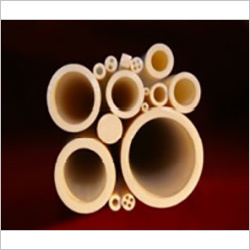
Ceramic Tubes
500.0 INR/Piece
Product Details:
X
Ceramic Tubes Price And Quantity
- 500.0 INR/Piece
- 100 Piece
Ceramic Tubes Trade Information
- India
- Cash Advance (CA), Cash in Advance (CID)
- 5000 Piece Per Month
- 15 Days
- No
- Contact us for information regarding our sample policy
- Standard Packing
- Asia, Australia, Central America, North America, South America, Eastern Europe, Western Europe, Middle East, Africa
- All India
- IEC
Product Description
A ceramic tube is a hollow cylindrical component made from ceramic material. These tubes are known for their exceptional properties, including high-temperature resistance, corrosion resistance, and electrical insulation. They are manufactured from various ceramic materials, each offering unique characteristics tailored to specific applications. Common materials include alumina, zirconia, quartz, mullite, and silicon carbide. Ceramic tubes find wide applications in industries such as high-temperature furnaces, thermocouple protection, electrical insulation, and laboratory equipment. Get Ceramic Tubes as per your demands with an assurance of fast and safe delivery.
Wide Range of Applications
Ceramic tubes are versatile components extensively used for insulating and protecting electrical wires, supporting thermal and electrical insulation in demanding environments, and serving as protective conduits in furnaces and heaters. Their properties make them suitable for both high-temperature and chemically aggressive settings, ensuring durability and longevity in industrial applications.
Customizable Dimensions and Surface Finish
Customers can select ceramic tubes tailored to their requirements with variable outer diameters, wall thickness, and lengths up to 600 millimeters. The tubes are available in smooth, glazed, or matt finishes, providing options for both functional performance and aesthetic preferences. This flexibility allows the tubes to fit seamlessly within different setups across multiple industries.
Superior Chemical and Thermal Resistance
Manufactured using high-grade ceramics, these tubes resist temperatures up to 1400C and withstand exposure to acids, alkalis, and corrosive substances. This makes them highly suitable for applications where thermal stability and chemical resistance are paramount, ensuring reliable insulation and protection under extreme conditions.
FAQs of Ceramic Tubes:
Q: How are ceramic tubes installed for insulating wires and electrical components?
A: Ceramic tubes are fitted over wires and electrical components to provide a protective and insulating barrier. Installation usually involves sliding the tube onto the wire or fixing it within assemblies in furnaces or heaters, ensuring secure and effective insulation where high-temperature resistance is needed.Q: What are the key applications for ceramic tubes in industrial environments?
A: Ceramic tubes are primarily used for insulating and safeguarding wires, serving in furnace and heater assemblies, and providing thermal and electrical insulation in harsh settings such as chemical processing, metallurgy, and power generation where high temperature and chemical resistance are crucial.Q: When should ceramic tubes be selected over other insulation materials?
A: Ceramic tubes are recommended when the application demands resistance to extreme temperatures (up to 1400C), exposure to corrosive chemicals, or the need for a long-lasting, non-reactive protective barrier. They outperform many organic insulators in harsh and high-temperature conditions.Q: Where can ceramic tubes be sourced in India, and what options are available?
A: Ceramic tubes are widely available through manufacturers, distributors, suppliers, and traders across India. Customers can choose from various dimensions, surface finishes, and warranty options to match their specific requirements for industrial, laboratory, or commercial use.Q: What is the process for customizing the dimensions and surface finish of ceramic tubes?
A: Customization involves specifying the required outer diameter, wall thickness, length, and surface finish during ordering. Manufacturers generally offer tailored solutions based on the customers technical and aesthetic preferences, ensuring a precise fit for the intended application.Q: What benefits do ceramic tubes offer in terms of chemical resistance and durability?
A: Ceramic tubes deliver superior resistance to acids, alkalis, and corrosion, ensuring long-term performance in aggressive environments. Their robust composition provides enduring protection and insulation, reducing maintenance and replacement needs in industrial settings.Tell us about your requirement

Price:
Quantity
Select Unit
- 50
- 100
- 200
- 250
- 500
- 1000+
Additional detail
Mobile number
Email


GST : 24BHBPS9354J1ZX

- S-69, Vivekanand Industrial Estate, Ahmedabad - 380021, Gujarat, India
- Phone :08045477197

- Mr. Pratik (Proprietor)
- Mobile :08045477197
- Send Inquiry

 Send Inquiry
 Send SMS
 Call Me Free
INDUSTRIAL CERAMICS
All Rights Reserved.(Terms of Use)
Developed and Managed by Infocom Network Private Limited.
Developed and Managed by Infocom Network Private Limited.

